How to make well water drinkable? Necessary treatments and tests [Basic knowledge]
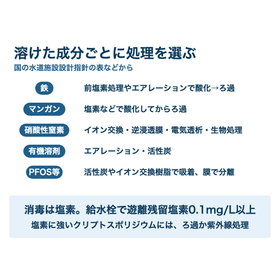
Is it safe just because of filtration and chlorine? The treatment varies depending on the dissolved components. This explains how to choose the treatment for making well water safe for drinking.
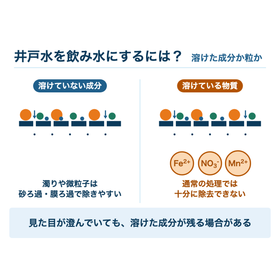
To use well water as drinking water, it is essential to first understand what it contains through testing, and then combine treatments that correspond to the results. The items and frequency of testing will be addressed on another page, so here we will focus on the concept of treatment. ■ What can be removed by filtration? Standard water purification primarily involves removing undissolved components. Turbidity and fine particles are easily removed through sand filtration or membrane filtration. On the other hand, substances dissolved in water are not adequately removed by standard treatments. Even if the water appears clear, dissolved components may still be present. ■ How effective is chlorine disinfection? Chlorine and ozone are used to treat general bacteria and E. coli. In water supply systems, it is mandated by the Water Supply Act Enforcement Regulations to maintain free residual chlorine at 0.1 mg/L or higher at the water supply tap. However, there are pathogenic organisms, such as Cryptosporidium, that are resistant to chlorine. If there is a risk of contamination in the raw water, the ministerial ordinance that establishes technical standards for water supply facilities stipulates the requirement for filtration equipment that can remove such pathogens or ultraviolet treatment equipment that can inactivate them. Please feel free to consult with us first.
- Company:トリイ
- Price:Other